
Table of Contents
ToggleBest Types of Keywords in SEO: A Complete Beginner-to-Advanced Guide
The Best Types of Keywords in SEO play a critical role in how websites rank, attract traffic, and convert visitors into customers. Every search on Google starts with a keyword, and choosing the right keyword type determines whether your content reaches the right audience or gets lost among competitors.
No matter how visually appealing your website is or how valuable your services are, without the right keyword strategy, search engines will struggle to understand your content. That is why learning and applying the best types of keywords in SEO is essential for long-term organic growth.
Every successful SEO strategy starts with one critical element: keywords.
No matter how attractive your website looks or how valuable your service is, without the right keywords, search engines will never understand your content.
Understanding the best types of keywords in SEO helps you attract the right audience, rank faster, and convert visitors into customers.
This guide explains keyword types from the basics to advanced SEO concepts.
It is written in simple English, with real-world examples, practical use cases, and clear explanations.
Whether you are a beginner, business owner, blogger, or digital marketer, this article will help you build a strong SEO foundation.
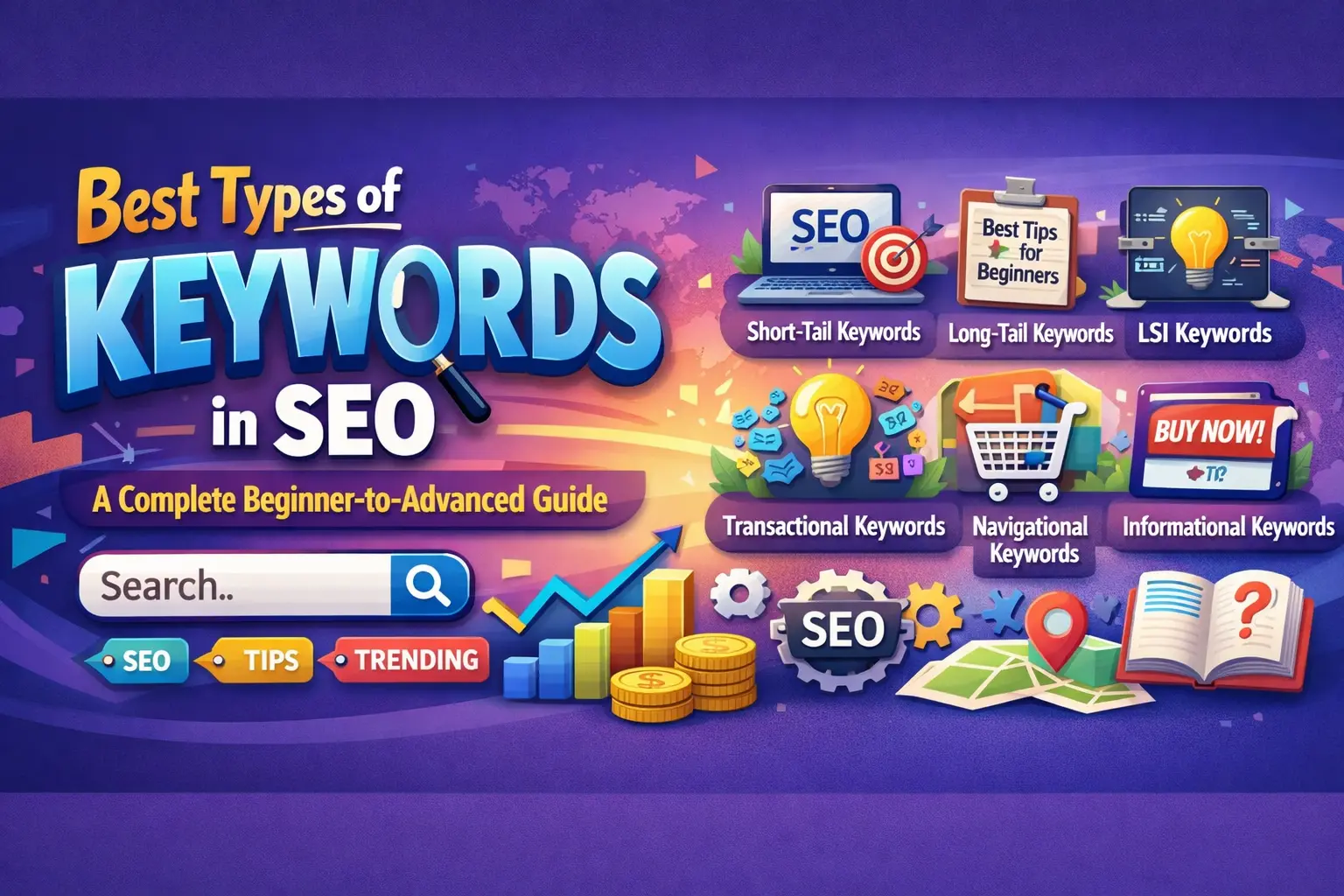
What Are Keywords in SEO?
Keywords are the words or phrases users type into search engines when searching for information, products, or services.
Search engines analyze keywords to:
-
Understand user intent
-
Match relevant content
-
Decide search rankings
If your content answers the user’s query better than competitors, Google rewards your page with higher visibility.
Simple Example
User search:
“best types of keywords in seo”
Google expects:
-
Clear explanation
-
Structured content
-
Practical examples
If your page satisfies these expectations, ranking becomes easier.
Keywords act as a bridge between users, content, and search engines.
Why Choosing the Best Types of Keywords in SEO Matters
Many websites fail not because their content is poor, but because they target the wrong keywords.
Some keywords bring traffic but no leads.
Some keywords convert well but get ignored.
Understanding keyword types helps you:
-
Focus on the right audience
-
Save time and SEO budget
-
Improve conversion rates
-
Build long-term authority
-
Create goal-driven content
SEO is not about ranking for every keyword.
It is about ranking for the best keyword type based on your goal.
Overview of the Best Types of Keywords in SEO
Here is a quick overview before we dive deeper:
| Keyword Type | Primary Purpose |
|---|---|
| Short-tail keywords | Brand visibility |
| Long-tail keywords | Higher conversions |
| Informational keywords | Education & awareness |
| Navigational keywords | Brand access |
| Transactional keywords | Sales & leads |
| Commercial investigation keywords | Comparison |
| Branded keywords | Brand authority |
| Non-branded keywords | New traffic |
| Geo-targeted keywords | Local SEO |
| LSI keywords | Context & relevance |
Now let’s explore each type in detail.
1. Short-Tail Keywords
Short-tail keywords are broad search terms containing one or two words.
Examples
-
SEO
-
Marketing
-
Shoes
Characteristics
-
Very high search volume
-
Extremely high competition
-
Unclear user intent
Advantages
-
Wide visibility
-
Useful for branding
Disadvantages
-
Hard to rank
-
Low conversion rate
Real-World Example
A new website trying to rank for “SEO” competes with global brands and authority websites.
Best Practice:
Short-tail keywords are suitable only for high-authority websites.
2. Long-Tail Keywords (Most Important Keyword Type)
Long-tail keywords are longer, more specific search phrases.
Examples
-
best types of keywords in seo
-
affordable SEO services for small businesses
-
website design company in Chennai
Why Long-Tail Keywords Are Powerful
-
Lower competition
-
Clear intent
-
Higher conversion rates
Mini Case Scenario
A local agency targeted
“digital marketing services in Velachery”
instead of “digital marketing.”
Result:
-
Faster rankings
-
Better leads
-
Lower SEO cost
More than 70% of searches are long-tail keywords, making them one of the best types of keywords in SEO.
3. Informational Keywords
Informational keywords are used when users want to learn or understand something.
Examples
-
what is SEO
-
how keyword research works
-
best types of keywords in SEO
User Intent
Learning, not buying.
Best Content Formats
-
Blog articles
-
Guides
-
Tutorials
-
Explainer content
SEO Benefits
-
Builds authority
-
Improves trust
-
Attracts backlinks
Educational content helps establish expertise and long-term traffic.
4. Navigational Keywords
Navigational keywords are used when users want to visit a specific website or brand.
Examples
-
winkdezign website
-
Google Analytics login
-
YouTube Studio
Characteristics
-
Brand-focused
-
High click-through rate
-
Limited traffic expansion
Use Case
Best for:
-
Homepages
-
Brand-specific pages
Navigational keywords help protect brand identity online.
5. Transactional Keywords
Transactional keywords indicate that users are ready to take action.
Examples
-
buy SEO services
-
hire web designer
-
SEO pricing packages
User Mindset
Ready to purchase or contact.
Best Pages
-
Service pages
-
Landing pages
-
Product pages
Real-Life Scenario
A user searching
“hire SEO expert in Chennai”
is very close to converting.
Transactional keywords directly impact revenue.
6. Commercial Investigation Keywords
These keywords are used when users compare options before buying.
Examples
-
best SEO company in India
-
SEO tools comparison
-
WordPress vs Shopify
Buyer Journey Stage
Middle of the funnel.
Best Content Types
-
Comparison articles
-
Reviews
-
Case studies
Practical Tip
Use tables, pros and cons, and honest insights.
These are among the best types of keywords in SEO for nurturing leads.
7. Branded Keywords
Branded keywords include a business or product name.
Examples
-
Winkdezign SEO services
-
Apple iPhone
Benefits
-
High trust
-
Strong conversion
-
Brand protection
Why They Matter
If you do not rank for your brand keywords, competitors can steal that traffic.
Always optimize for branded searches.
8. Non-Branded Keywords
Non-branded keywords do not include brand names.
Examples
-
SEO services near me
-
web design agency
-
digital marketing company
Importance
-
Attract new users
-
Expand reach
-
Increase brand awareness
A balanced SEO strategy includes both branded and non-branded keywords.
9. Geo-Targeted Keywords (Local SEO Keywords)
Geo-targeted keywords include location-based terms.
Examples
-
SEO company in Chennai
-
website designers near me
-
digital marketing agency in Velachery
Best For
-
Local businesses
-
Service-based companies
-
Physical stores
Local SEO Scenario
A salon optimized for
“bridal makeup artist in T Nagar”
and started receiving local bookings quickly.
Local keywords are among the best types of keywords in SEO for service businesses.
10. LSI Keywords (Semantic Keywords)
LSI keywords are contextually related terms that support the main keyword.
Example for “Best Types of Keywords in SEO”
-
SEO keyword categories
-
keyword research methods
-
search intent keywords
Why LSI Keywords Matter
They help search engines understand topic depth and relevance.
Best Practice
Use them naturally within content.
Never overuse or force them.
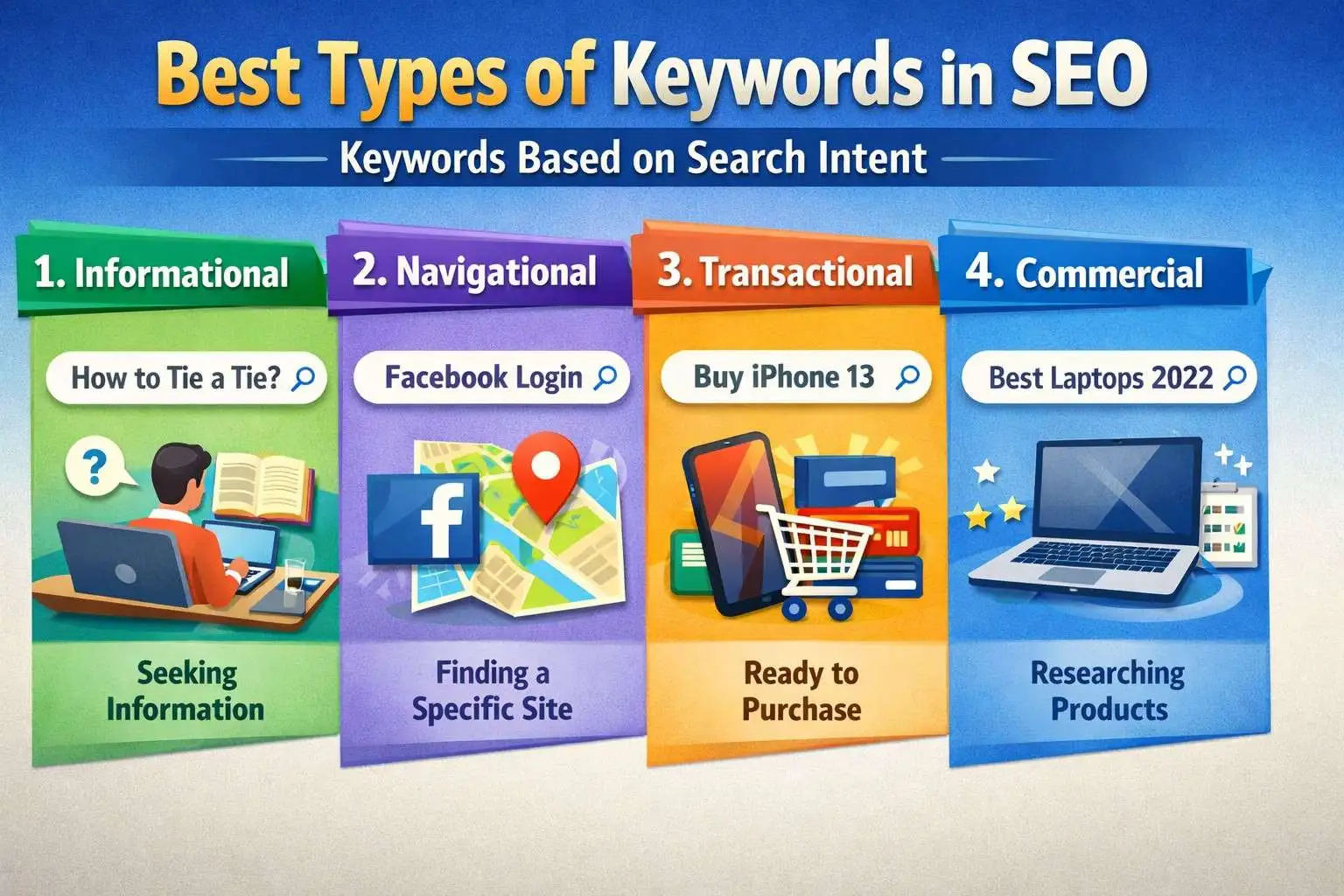
Keywords Based on Search Intent
Search intent determines how Google ranks content.
Main Intent Types
| Intent Type | Example |
|---|---|
| Informational | how SEO works |
| Navigational | winkdezign login |
| Transactional | buy SEO services |
| Commercial | best SEO tools |
Matching intent is more important than keyword volume.
How to Choose the Best Keyword Type for Your Goal
Follow this simple process:
-
Define your objective
-
Identify your audience
-
Understand search intent
-
Select keyword type
-
Analyze competition
-
Create focused content
Example
Goal: Generate leads
Keyword type: Transactional + Local
Keyword: SEO company in Madurai
Keyword Placement Best Practices
Use keywords naturally in:
-
Page title
-
Headings
-
First 100 words
-
URL
-
Image alt text
Avoid keyword stuffing.
Modern SEO values clarity over repetition.
Common Keyword Mistakes to Avoid
-
Targeting only high-competition keywords
-
Ignoring user intent
-
Over-optimizing content
-
Using irrelevant keywords
-
Not updating old content
SEO success comes from consistency and relevance.
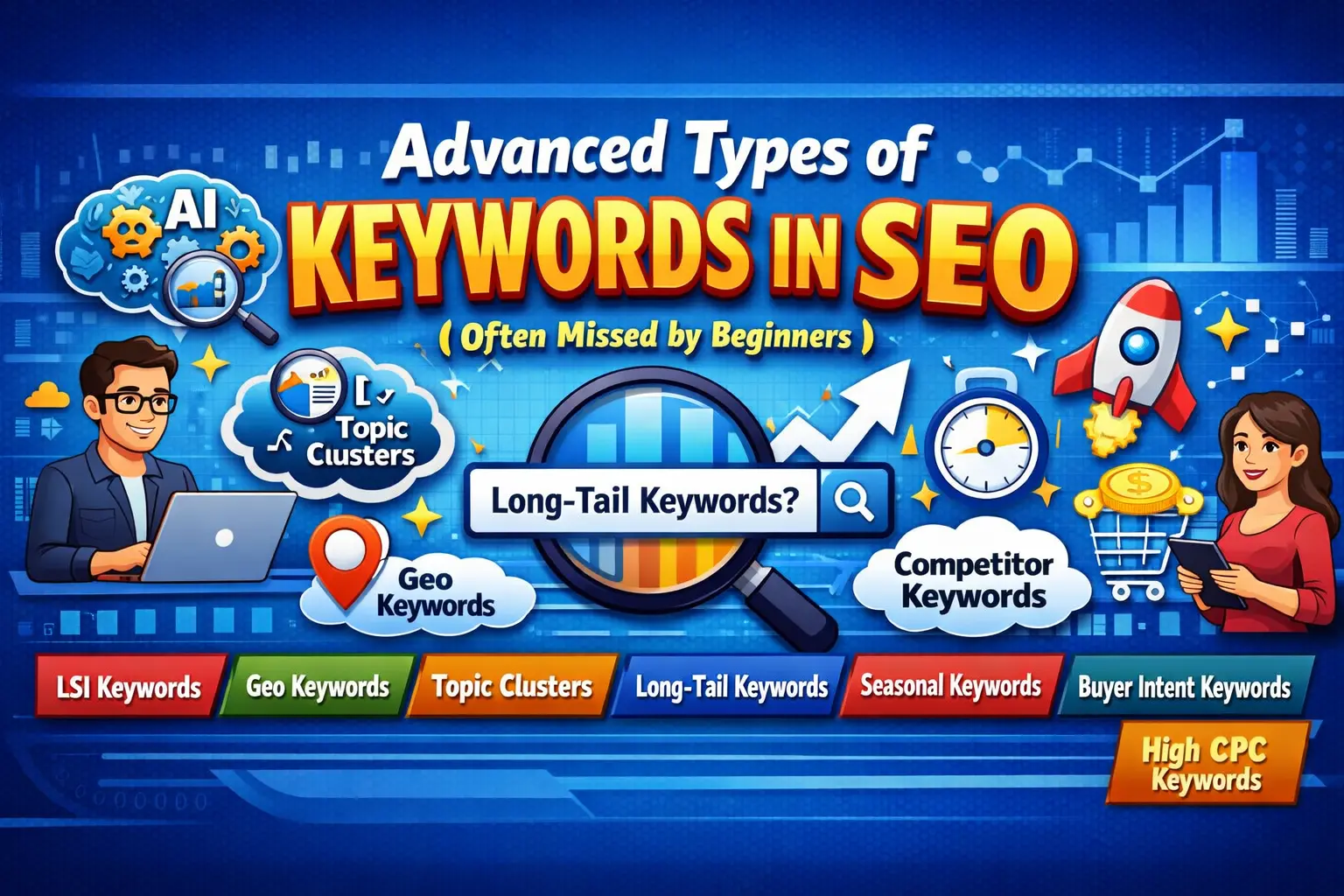
Advanced Types of Keywords in SEO (Often Missed by Beginners)
Most beginner guides stop with basic keyword categories.
But advanced SEO success comes from understanding specialized keyword types that influence traffic quality and conversions.
These advanced keyword types help you refine strategy and outperform competitors.
Keyword Modifiers
Keyword modifiers are words added to a base keyword to refine intent.
Common Modifiers
-
Best
-
Top
-
Affordable
-
Cheap
-
Near me
-
Online
-
Professional
Examples
-
best types of keywords in SEO
-
affordable SEO services
-
top digital marketing agency
Why Modifiers Matter
-
Reduce competition
-
Improve intent clarity
-
Increase conversion potential
Practical Use Case
Instead of targeting
“SEO services”
Target
“affordable SEO services for startups”
This attracts users who are closer to decision-making.
Question-Based Keywords
Question keywords are queries framed as questions.
Examples
-
what are the best types of keywords in SEO
-
how keyword research works
-
why SEO keywords are important
Why They Are Powerful
-
Ideal for featured snippets
-
High voice-search compatibility
-
Strong informational intent
Best Content Types
-
Blog posts
-
FAQ sections
-
How-to guides
SEO Tip
Use question keywords as:
-
H2 or H3 headings
-
FAQ questions
Buyer-Intent Keywords
Buyer-intent keywords indicate users who are ready to purchase or enquire.
Examples
-
SEO services pricing
-
hire SEO consultant
-
buy digital marketing package
Difference from Transactional Keywords
Transactional keywords show action.
Buyer-intent keywords show decision readiness.
Why They Convert Well
-
Clear commercial intent
-
Less research-focused
-
More revenue-driven
These are among the best types of keywords in SEO for service-based businesses.
Micro-Niche Keywords
Micro-niche keywords target a very specific audience.
Examples
-
SEO services for real estate agents
-
digital marketing for doctors
-
website design for salons
Benefits
-
Very low competition
-
Highly targeted traffic
-
Faster ranking
Mini Scenario
A marketer targeting
“SEO services for dentists in Chennai”
will rank faster than generic agency keywords.
Micro-niche keywords are perfect for scaling authority.
Seasonal Keywords
Seasonal keywords trend during specific times of the year.
Examples
-
Diwali marketing offers
-
Christmas website design deals
-
Pongal jewellery offers
When to Use
-
Festivals
-
Sales seasons
-
Annual events
SEO Strategy Tip
Create content 2–3 months before the season starts.
Seasonal keywords boost short-term traffic spikes.
Evergreen Keywords
Evergreen keywords remain relevant throughout the year.
Examples
-
best types of keywords in SEO
-
what is digital marketing
-
SEO tips for beginners
Why They Matter
-
Consistent traffic
-
Long-term ranking
-
Stable content investment
This article itself targets an evergreen keyword.
Short-Term vs Long-Term Keywords
Understanding keyword lifespan improves planning.
Short-Term Keywords
-
Trend-based
-
News-driven
-
Temporary traffic
Long-Term Keywords
-
Evergreen
-
Educational
-
Sustainable traffic
Best Practice
Balance both to maintain steady growth.
Competitor Keywords
Competitor keywords are keywords your competitors already rank for.
How They Help
-
Reveal content gaps
-
Identify ranking opportunities
-
Improve keyword targeting
Practical Tip
Analyze competitor blogs and service pages to discover:
-
Long-tail variations
-
Missed keyword opportunities
Competitor research strengthens keyword selection.
Negative Keywords (For Paid + SEO Strategy)
Negative keywords are terms you intentionally avoid.
Examples
If you sell premium services, avoid:
-
free
-
cheap
-
DIY
Why Negative Keywords Matter
-
Filter irrelevant traffic
-
Improve lead quality
-
Reduce bounce rate
Negative keyword thinking improves SEO intent targeting.
Content-Specific Keywords
Different content formats require different keyword types.
Blog Content
-
Informational
-
Question-based
-
Long-tail
Service Pages
-
Transactional
-
Buyer-intent
-
Local keywords
Product Pages
-
Commercial
-
Comparison
-
Brand-related
Choosing keywords based on content type improves relevance.
How Google Evaluates Keyword Quality (EEAT Perspective)
Google does not rank keywords alone.
It evaluates content quality + intent match + authority.
Google Looks For
-
Real expertise
-
Clear explanations
-
Practical examples
-
Trust signals
Using the best types of keywords in SEO is effective only when content adds real value.
How to Build a Keyword Strategy Using Keyword Types
Instead of random keyword targeting, use a structured plan.
Step-by-Step Framework
-
Identify business goal
-
Choose keyword type
-
Match search intent
-
Create content format
-
Optimize naturally
-
Track performance
Example Strategy
Goal: Brand awareness
Keyword type: Informational + Long-tail
Keyword: best types of keywords in SEO
Goal: Lead generation
Keyword type: Transactional + Local
Keyword Mapping: Advanced SEO Technique
Keyword mapping assigns keywords to specific pages.
Why It Matters
-
Avoids keyword cannibalization
-
Improves site structure
-
Enhances internal relevance
Simple Example
| Page | Keyword Type |
|---|---|
| Blog | Informational |
| Service Page | Transactional |
| Location Page | Local |
Keyword mapping improves SEO clarity.
How Keyword Types Impact Conversion Rates
Not all keywords convert equally.
Conversion Comparison
| Keyword Type | Conversion Rate |
|---|---|
| Informational | Low |
| Long-tail | Medium |
| Transactional | High |
| Local | Very High |
Understanding this helps prioritize content creation.
Future of Keywords in SEO
Keywords are evolving, not disappearing.
Emerging Trends
-
Voice search queries
-
Conversational keywords
-
AI-assisted search intent
Example
Instead of:
“best types of keywords in SEO”
Users may ask:
“What are the best keyword types for SEO success?”
Intent still matters more than phrasing.
FAQ: Best Types of Keywords in SEO
1. What are the best types of keywords in SEO?
The best types of keywords in SEO include long-tail keywords, informational keywords, transactional keywords, commercial investigation keywords, local (geo-targeted) keywords, branded keywords, non-branded keywords, and LSI (semantic) keywords. Each type serves a different purpose in the SEO funnel.
2. Why are long-tail keywords considered the best in SEO?
Long-tail keywords are considered one of the best types of keywords in SEO because they have lower competition, clearer user intent, and higher conversion rates. They are easier to rank for, especially for new or small websites.
3. How many keyword types should be used on one page?
Ideally, one page should target one primary keyword, supported by 3–6 related keyword types such as long-tail variations, LSI keywords, and intent-based keywords. This helps maintain focus and avoids keyword cannibalization.
4. Are short-tail keywords still useful in modern SEO?
Yes, but mostly for brand awareness and authority websites. Short-tail keywords have high search volume but very high competition and low conversion rates, making them less effective for beginners.
5. What is the difference between informational and transactional keywords?
Informational keywords are used when users want to learn or understand a topic, while transactional keywords are used when users are ready to buy, hire, or take action. Both are important but serve different stages of the buyer journey.
6. Which keyword type is best for getting leads?
Transactional keywords, buyer-intent keywords, and local keywords are the best types of keywords in SEO for generating leads because they target users who are ready to take action.
7. What are LSI keywords, and do they still matter?
LSI (Latent Semantic Indexing) keywords are contextually related terms that help search engines understand content depth. While Google no longer uses classic LSI, semantic keywords are still very important for relevance and ranking.
8. How do local keywords help in SEO?
Local or geo-targeted keywords help businesses appear in location-based searches. They are especially effective for service-based and brick-and-mortar businesses looking to attract nearby customers.
9. Can one keyword type work for all pages?
No. Different pages need different keyword types. Blog posts work best with informational and long-tail keywords, while service pages need transactional and buyer-intent keywords. Choosing the wrong type reduces performance.
10. Do keywords still matter with AI and voice search?
Yes. Keywords still matter, but intent and context matter more than exact wording. Voice search often uses question-based and conversational keywords, which are still part of keyword strategy.
11. How often should keywords be used in content?
Keywords should be used naturally. There is no fixed number. The primary keyword should appear in the title, first 100 words, headings, and naturally throughout the content without keyword stuffing.
12. What happens if the wrong keyword type is chosen?
Choosing the wrong keyword type can lead to low traffic quality, high bounce rates, poor conversions, and wasted SEO effort. Matching keyword type with user intent is critical for success.
Final Thoughts: Best Types of Keywords in SEO
Understanding the Best Types of Keywords in SEO is not just about ranking higher on Google. It is about attracting the right people, answering their real questions, and guiding them toward meaningful actions.
Every keyword type has a purpose. Informational keywords build trust and authority. Long-tail keywords bring focused traffic. Transactional and local keywords drive real business results. When these keyword types are used strategically, SEO becomes predictable and sustainable.
Successful SEO does not come from chasing high-volume keywords blindly. It comes from choosing the right keyword type based on your goal, your audience, and search intent. When your content aligns with what users truly want, search engines naturally reward it.
If you want to turn keyword research into consistent traffic, leads, and growth, focus on using the best types of keywords in SEO with clarity, relevance, and value.
👉 https://winkdezign.com/
Build smarter SEO strategies and grow your digital presence with confidence 🚀