

Knowledge Graph Optimization: The Complete Guide to Building Search Authority
Search engines have evolved far beyond matching keywords on a page. Today, they focus on understanding people, businesses, places, products, and concepts as entities. This shift has made Knowledge Graph Optimization one of the most important strategies for improving online visibility and building long-term authority.
Instead of asking only, “Does this page contain the right keywords?” modern search engines also ask:
- Who is this business?
- Is it trustworthy?
- Is the information consistent across the web?
- How is it connected to other recognized entities?
When your brand is clearly understood as an entity, search engines can display richer search experiences, improve confidence in your content, and better connect your website with relevant user queries.
This guide explains what Knowledge Graph Optimization is, why it matters, and how businesses can strengthen their digital presence using practical, sustainable techniques.
Artificial intelligence is changing how people search online. Instead of browsing through multiple web pages, users now ask AI-powered search engines for direct answers. This shift has created a new digital marketing strategy known as AI Search Optimization (GEO). Businesses that adapt to this change are more likely to appear in AI-generated answers, while those relying only on traditional SEO may lose valuable visibility.
Today, AI search platforms analyze trustworthy sources, expert opinions, structured content, and user intent before generating responses. As a result, AI Search Optimization (GEO) has become an essential part of modern SEO strategies.
Whether you own a local business, an eCommerce store, a SaaS company, or a service-based business, understanding AI Search Optimization (GEO) can help you stay ahead of competitors and reach more potential customers.
What Is Knowledge Graph Optimization?
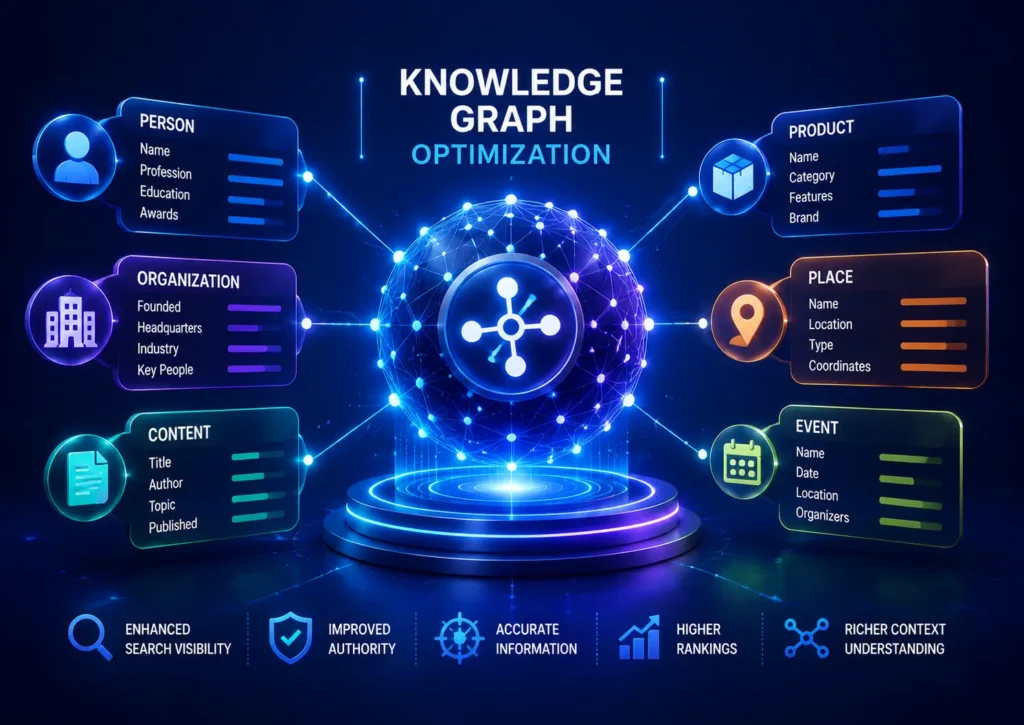
Knowledge Graph Optimization is the process of helping search engines accurately identify, understand, and connect your business or brand as a recognized entity.
Rather than relying only on keywords, search engines combine information from multiple trusted sources to build relationships between entities.
For example, a digital marketing agency may be connected to:
- Its founders
- Office locations
- Official website
- Social profiles
- Published articles
- Customer reviews
- Industry expertise
- Awards and recognitions
When these signals remain consistent across trusted platforms, search engines become more confident about the identity and authority of that business.
How Does a Knowledge Graph Work?
A Knowledge Graph stores information as connected entities instead of isolated webpages.
Think of it as a giant network where everything has relationships.
Example:
Winkdezign
↓
Digital Marketing Agency
↓
Located in Madurai
↓
Offers SEO Services
↓
Website Design
↓
Google Business Profile
↓
Social Media Accounts
↓
Client Reviews
Each verified relationship increases confidence that the business is legitimate.
Why Knowledge Graph Optimization Matters
Businesses often invest heavily in content creation but overlook entity recognition.
A strong entity profile can support:
- Better search visibility
- Increased trust
- Improved topical authority
- Rich search experiences
- Stronger brand recognition
- More accurate local search results
While no optimization guarantees specific rankings, making your business easier for search engines to understand can improve how it is represented in search.
The Evolution from Keywords to Entities
Years ago, SEO mainly focused on repeating keywords throughout a page.
Today’s search systems are much better at understanding meaning and relationships.
For example:
Old SEO:
“Best digital marketing company”
Modern SEO:
Search engines understand:
- Business
- Digital Marketing
- Services
- Location
- Reviews
- Experience
- Brand reputation
The emphasis has shifted from keyword matching to understanding real-world entities.
Core Components of Knowledge Graph Optimization
Several foundational elements help establish a recognizable and trustworthy entity.
1. Build a Strong Brand Identity
Search engines compare information from many sources.
Your business name should remain consistent across:
- Website
- Google Business Profile
- Social media
- Business directories
- Press mentions
- Author profiles
Even small differences in spelling or formatting can create confusion.
Example
Instead of using multiple variations such as:
- Wink Dezign
- Wink Design
- WinkDezign
Use one consistent brand name everywhere.
2. Publish High-Quality Authoritative Content
Knowledge Graph signals grow stronger when you consistently publish useful information.
Focus on:
- Educational articles
- Industry insights
- Original research
- Case studies
- Tutorials
- Frequently asked questions
Content that demonstrates first-hand experience and expertise aligns well with Google’s emphasis on helpful, people-first content.
3. Use Structured Data
Structured data helps search engines interpret page content more accurately.
Common schema types include:
| Schema Type | Purpose |
|---|---|
| Organization | Business details |
| LocalBusiness | Local company information |
| Person | Author information |
| Article | Blog content |
| FAQ | Frequently asked questions |
| Product | Product pages |
| Service | Service pages |
| Breadcrumb | Site navigation |
Implementing appropriate schema does not guarantee rich results, but it provides clearer signals about your content.
4. Maintain Consistent Business Information
Consistency is essential.
Ensure the following details match everywhere:
- Business name
- Address
- Phone number
- Website
- Business hours
- Logo
Discrepancies across platforms can reduce confidence in your business information.
Entity SEO vs Traditional SEO
| Traditional SEO | Entity-Based SEO |
|---|---|
| Focus on keywords | Focus on entities |
| Optimize individual pages | Optimize brand identity |
| Build backlinks | Build authority and relationships |
| Rankings first | Understanding and trust first |
| Page relevance | Entity relevance |
Modern SEO strategies often combine both approaches.
Advanced Knowledge Graph Optimization Strategies
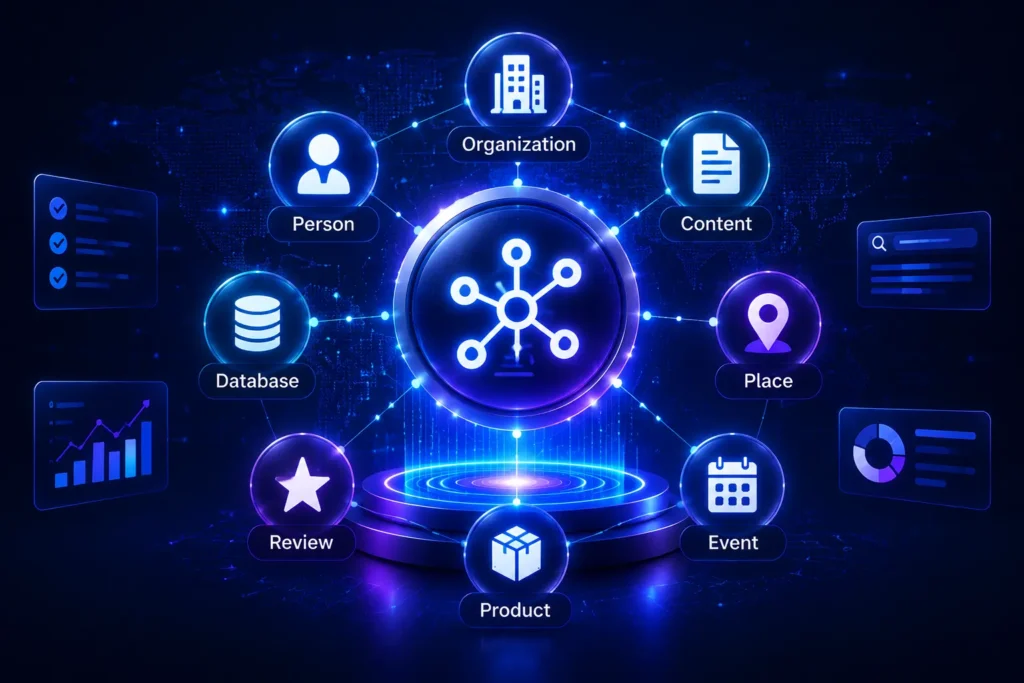
Once you have established a consistent brand identity and published helpful content, the next step is to strengthen the signals that help search engines understand your expertise and relationships.
Build Topical Authority
Search engines are more likely to trust a website that covers a subject in depth rather than publishing isolated articles.
For example, if your business offers digital marketing services, create comprehensive content around related topics such as:
- Search Engine Optimization (SEO)
- Local SEO
- Technical SEO
- Content Marketing
- Website Design
- Conversion Rate Optimization
- Google Business Profile Optimization
- AI Search Optimization
Connect these articles with logical internal links so readers can easily navigate between related topics.
Mini Case Scenario
A web design agency publishes one article about SEO. It receives moderate traffic.
The same agency later creates a complete resource hub with guides covering website optimization, local SEO, structured data, content strategy, and analytics.
Over time, visitors spend more time exploring the site, and search engines gain stronger signals that the website is knowledgeable in its field.
Strengthen Entity Relationships
Knowledge Graph Optimization is not only about your website. It is also about how your business is represented across the web.
Important entity relationships include:
- Official website
- Google Business Profile
- Social media profiles
- Business directories
- Industry associations
- News mentions
- Author profiles
- Customer reviews
When these sources consistently reference your brand, they help reinforce your digital identity.
Optimize Author Profiles
Author credibility is an important trust signal.
Each article should ideally include:
- Author name
- Professional role
- Experience
- Area of expertise
- Professional profile
- Links to other articles by the same author
This helps readers understand who created the content and supports transparency.
Use Structured Internal Linking
Internal links help users discover related information while also providing context for search engines.
Example structure:
| Main Topic | Related Content |
|---|---|
| Knowledge Graph Optimization | Entity SEO Guide |
| Knowledge Graph Optimization | Structured Data Basics |
| Knowledge Graph Optimization | Local SEO Checklist |
| Knowledge Graph Optimization | Technical SEO Guide |
| Knowledge Graph Optimization | Content Marketing Strategy |
A well-planned internal linking structure improves navigation and helps organize content into meaningful topic clusters.
Monitor Brand Mentions
Keep track of where your business is mentioned online.
Look for opportunities to:
- Correct inaccurate information.
- Update outdated business details.
- Respond professionally to reviews.
- Earn mentions through valuable content and partnerships.
Maintaining accurate information across the web strengthens your overall entity profile.
Benefits of AI Search Optimization (GEO)
Businesses implementing AI Search Optimization (GEO) can expect several long-term advantages:
- Increased AI search visibility
- Better organic traffic
- Improved brand authority
- Higher customer trust
- More qualified leads
- Stronger content performance
- Future-ready SEO strategy
- Better user experience
- Increased engagement
- Higher conversion potential
These benefits make GEO an essential addition to any modern digital marketing strategy.
Key Signals Search Engines Use
Search engines evaluate multiple signals when understanding entities.
These may include:
Website Quality
A well-organized website with clear navigation and valuable content helps establish credibility.
Brand Mentions
Mentions on reputable websites contribute to broader recognition, even when they are not traditional backlinks.
Customer Reviews
Authentic reviews on trusted platforms reinforce trust and provide additional context about your business.
Expert Authors
Articles written by identifiable experts with clear author information can strengthen perceived expertise.
Social Profiles
Verified and consistently branded social media profiles help connect your organization across the web.

Frequently Asked Questions (FAQs)
Conclusion
Knowledge Graph Optimization is becoming an essential part of modern SEO because search engines increasingly rely on entities and relationships to understand the web.
By maintaining consistent business information, publishing high-quality content, implementing structured data, strengthening topical authority, and building trustworthy relationships across the web, businesses can create a stronger digital presence that benefits both users and search engines.
Rather than chasing shortcuts, focus on delivering accurate information, demonstrating real expertise, and keeping your online presence consistent. These practices provide a sustainable foundation for long-term visibility and brand credibility.
Call to Action
If you want to strengthen your online presence through modern SEO strategies, structured data implementation, content planning, and website optimization, explore the resources available at http://winkdezign.com and begin building a stronger, more recognizable digital brand.