


Answer Engine Optimization (AEO): The Complete Guide to Ranking in AI Search
The way people search online is changing faster than ever. Instead of scrolling through pages of search results, users now expect instant, accurate answers from AI-powered platforms like ChatGPT, Google AI Overviews, Microsoft Copilot, and voice assistants. This shift has made Answer Engine Optimization (AEO) one of the most important digital marketing strategies for businesses that want to stay visible online.
Traditional SEO focuses on ranking webpages. Answer Engine Optimization (AEO) focuses on becoming the answer that search engines and AI assistants choose to display. Whether you run a local business, an eCommerce website, or a service-based company, optimizing for answer engines can significantly improve your online visibility, credibility, and conversions.
In this comprehensive guide, you’ll learn what Answer Engine Optimization (AEO) is, why it matters, how it differs from traditional SEO, and the practical steps you can take to optimize your website for AI-powered search.
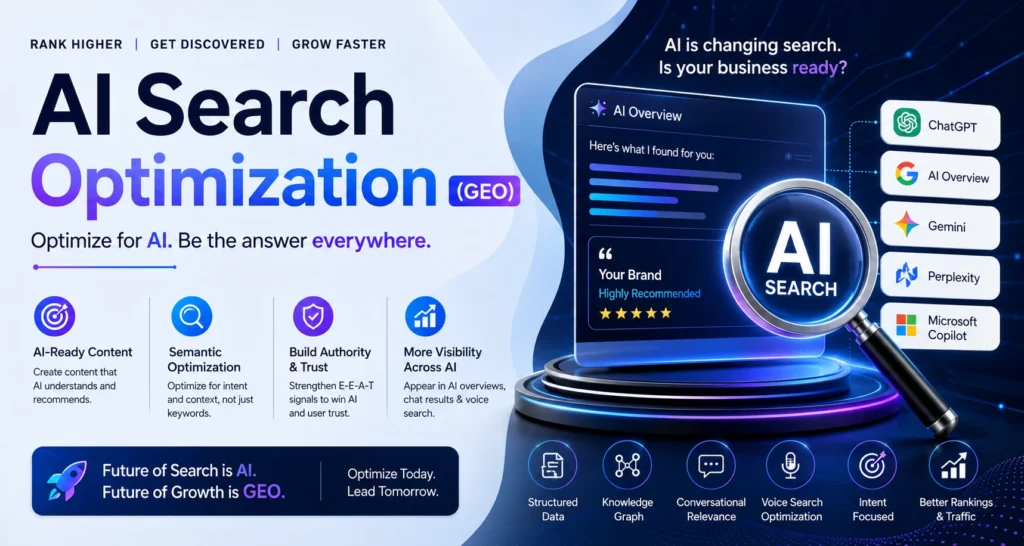
What is Answer Engine Optimization (AEO)?
Answer Engine Optimization (AEO) is the process of optimizing digital content so that AI search engines, voice assistants, and answer engines can easily understand, extract, and present it as a direct answer to user queries.
Unlike traditional search engine optimization, where users browse multiple search results, AEO focuses on providing concise, authoritative, and well-structured answers that AI systems can confidently reference.
Today’s answer engines analyze:
- Content quality
- Context
- User intent
- Website authority
- Structured data
- Content freshness
- Trustworthiness
The better your content satisfies these factors, the greater the chance of becoming the selected answer.
Why Answer Engine Optimization (AEO) Matters in 2026
Search behavior has evolved dramatically over the past few years.
Instead of typing:
“Best CRM software for small businesses.”
Users now ask:
“Which CRM is best for a small business under 20 employees?”
Or they simply ask ChatGPT:
“Recommend an affordable CRM with email automation.”
AI systems provide a direct response instead of showing ten blue links.
That means businesses must optimize their content differently.
Some major reasons Answer Engine Optimization (AEO) has become essential include:
- Growth of AI-powered search
- Increase in conversational searches
- Expansion of voice search
- Higher demand for instant answers
- Better visibility without relying only on rankings
- Increased brand authority
- More qualified website traffic
Businesses that invest in AEO today are positioning themselves for the future of search.
How Traditional SEO Differs from AI Search Optimization (GEO)
| Traditional SEO | Answer Engine Optimization (AEO) |
|---|---|
| Focuses on rankings | Focuses on answers |
| Optimizes keywords | Optimizes user intent |
| Competes for clicks | Competes to become the answer |
| Relies heavily on backlinks | Relies on authority and clarity |
| Targets search engines | Targets AI systems and users |
Instead, AEO builds on strong SEO foundations while adapting content for AI-driven experiences.
How Does Answer Engine Optimization (AEO) Work?
Answer engines process content differently from traditional search engines.
Their workflow generally follows these steps:
Step 1: Understand User Intent
The AI identifies what the user is actually trying to learn.
For example:
Search Query:
“How can I improve local SEO?”
Actual Intent:
“Give me practical methods to increase local search visibility.”
Content that directly addresses this intent has a better chance of being selected.
Step 2: Analyze Trustworthy Sources
AI systems prioritize content from websites that demonstrate:
- Experience
- Expertise
- Authority
- Trustworthiness
This aligns closely with Google’s EEAT principles.
Websites with detailed, accurate, and updated information typically perform better.
Step 3: Extract the Best Answer
Rather than reading an entire article aloud, answer engines often summarize one concise section.
For example:
Question
What is AEO?
Optimized Answer
Answer Engine Optimization (AEO) is the practice of structuring website content so AI-powered search engines and voice assistants can quickly understand and deliver it as a direct answer to users.
This type of concise paragraph has a higher chance of appearing in AI-generated answers.
Step 4: Provide Supporting Context
The answer engine may include:
- Additional explanations
- Related questions
- Tables
- Lists
- Comparisons
- Citations
- Source references
Well-organized content increases the chances of being selected.
Difference Between SEO and AEO
Although both strategies improve online visibility, their goals differ.
Traditional SEO
Traditional SEO focuses on increasing rankings in search engine results.
Key objectives include:
- Ranking for keywords
- Building backlinks
- Improving page speed
- Optimizing metadata
- Increasing click-through rates
Answer Engine Optimization (AEO)
AEO focuses on making your content understandable by AI systems.
Its objectives include:
- Answering questions directly
- Organizing information logically
- Using conversational language
- Demonstrating expertise
- Adding structured data
- Improving topical authority
Businesses should combine both SEO and AEO instead of choosing one over the other.

Core Elements of Answer Engine Optimization (AEO)
Several components contribute to successful AEO implementation.
1. Understand Search Intent
Every piece of content should answer a specific user question.
Instead of targeting only keywords, identify the problems your audience wants to solve.
Examples include:
- What is digital marketing?
- How does cloud hosting work?
- Which laptop is best for students?
- How much does website development cost?
- Why is local SEO important?
Each question can become an optimized content section.
2. Write Clear Answers First
Many websites bury important information under lengthy introductions.
Answer engines prefer immediate clarity.
A simple structure works well:
Question
What is local SEO?
Answer
Local SEO is the process of optimizing a business so it appears in location-based search results, helping nearby customers find products or services more easily.
After the direct answer, expand with supporting details.
3. Organize Content with Headings
Use descriptive headings that mirror real search queries.
Examples:
- What is AEO?
- Why is AEO important?
- How does AEO work?
- Best AEO tools
- Common AEO mistakes
This structure improves readability for both users and AI.
4. Use Lists and Tables
AI systems frequently extract information from:
- Bullet lists
- Numbered steps
- Comparison tables
- Checklists
Instead of writing long paragraphs, break information into digestible sections.
Example:
Benefits of Answer Engine Optimization (AEO)
- Better AI visibility
- Improved voice search performance
- Increased organic traffic
- Higher brand authority
- Better user experience
- Greater conversion opportunities
5. Build Topical Authority
Publishing one article is no longer enough.
Instead, create clusters of related content.
For example, if your website focuses on digital marketing, publish detailed guides covering:
- Technical SEO
- Local SEO
- Content marketing
- AI SEO
- Voice search optimization
- Featured snippets
- Schema markup
- User intent optimization
This signals expertise and strengthens your site’s authority on the topic.
Why Businesses Should Invest in Answer Engine Optimization (AEO)
As AI-powered search continues to evolve, businesses that provide helpful, structured, and authoritative content will gain a competitive advantage.
Investing in Answer Engine Optimization (AEO) can help you:
- Improve visibility in AI-generated search experiences
- Increase brand trust and credibility
- Reach users through voice assistants
- Capture featured snippets and direct answers
- Deliver a better user experience
- Generate more qualified leads
- Stay ahead of future search trends
Rather than replacing SEO, AEO enhances it by ensuring your content is ready for the next generation of search.
Common Answer Engine Optimization (AEO) Mistakes
Avoid these frequent mistakes.
1. Writing Only for Keywords
Keyword stuffing reduces readability.
Focus on answering user questions naturally.
2. Ignoring Search Intent
Ranking for irrelevant keywords brings the wrong audience.
Understand what users actually want before creating content.
3. Long, Confusing Paragraphs
Large blocks of text discourage readers.
Break information into smaller sections.
4. Missing Headings
Clear headings improve navigation for users and AI.
Use descriptive H2 and H3 headings throughout your content.
5. No FAQ Section
FAQs often appear in voice search and AI-generated answers.
Include concise, direct responses to common questions.
6. Weak Internal Linking
Connect related pages to build topical authority.
Example:
A page about AEO can naturally link to:
- Technical SEO
- Local SEO
- Content Marketing
- Schema Markup
- AI Search Optimization
7. Publishing Thin Content
Short articles with little value rarely perform well.
Aim to answer questions thoroughly while staying easy to read.
Content Formats That Perform Well in AEO
Certain content types naturally align with answer engines.
These include:
- How-to guides
- Beginner tutorials
- Ultimate guides
- Product comparisons
- Checklists
- Step-by-step instructions
- Industry glossaries
- Frequently asked questions
- Troubleshooting articles
- Best practices guides
Diversifying your content helps capture a wider range of search intents.
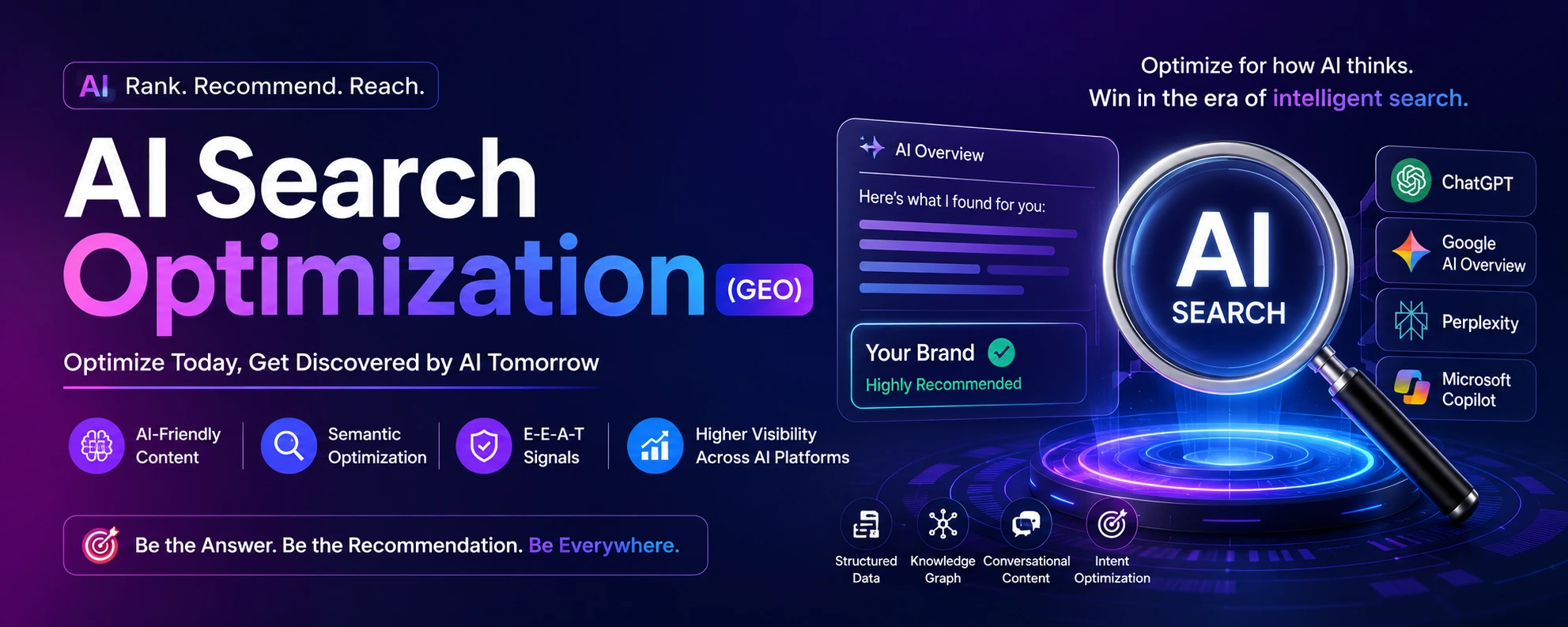
Measuring the Success of Answer Engine Optimization (AEO)
Tracking performance is essential to understand what works.
Key metrics include:
- Organic traffic growth
- Featured snippet appearances
- AI Overview visibility
- Voice search impressions
- Average engagement time
- Bounce rate
- Conversion rate
- Returning visitors
- Brand mentions
- Lead generation
Review these metrics regularly and refine your content strategy based on user behavior.
Frequently Asked Questions (FAQs)
Conclusion
The future of search is no longer limited to ranking on a search engine results page. AI-powered platforms are transforming how people discover information, compare products, and make purchasing decisions. Businesses that embrace Answer Engine Optimization (AEO) today will be better equipped to meet these changing expectations.
Success with Answer Engine Optimization (AEO) starts by understanding user intent, creating helpful and authoritative content, organizing information with clear headings, implementing structured data, and maintaining a strong focus on Google’s EEAT principles. Combined with a solid SEO foundation, these practices can improve visibility in AI-generated answers, voice search, featured snippets, and emerging search experiences.
Rather than chasing algorithms, focus on solving real customer problems with accurate, trustworthy, and easy-to-understand content. As AI search continues to evolve, websites that consistently provide value will earn greater visibility, stronger brand authority, and more qualified traffic.
If you’re looking to future-proof your website with advanced SEO, AI Search Optimization, Answer Engine Optimization (AEO), technical SEO, content strategy, and high-performing web design, the experts at Wink Dezign can help. Visit http://winkdezign.com to explore digital marketing, SEO, website development, and AI-ready optimization services designed to grow your business in the evolving search landscape.