

Prompt Search Optimization: Introduction
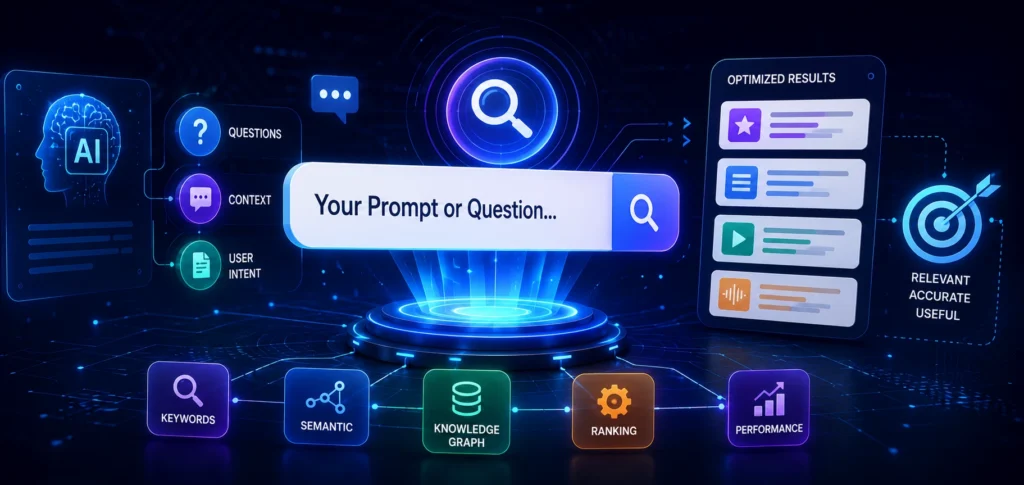
The way people search online is changing rapidly. Instead of typing only a few keywords into search engines, users now ask detailed questions to AI-powered platforms like ChatGPT, Google AI Overviews, Gemini, Claude, and Perplexity. Businesses that want to stay visible must adapt to this new search behavior. This is where Prompt Search Optimization becomes essential.
Unlike traditional SEO, which mainly focuses on ranking webpages in search engines, Prompt Search Optimization helps your content become the preferred source for AI-generated answers. It combines structured content, user intent, multimedia assets, and strong authority signals to improve visibility across modern AI search platforms.
Today, Multimodal SEO plays an equally important role. Search engines and AI assistants understand not only text but also images, videos, audio files, PDFs, and structured data. Businesses that optimize every content format gain better exposure and higher trust.
Whether you run a business website, an eCommerce store, a healthcare portal, an educational institution, or a digital marketing agency, implementing Prompt Search Optimization can significantly improve your online visibility and future-proof your digital presence.
What is Prompt Search Optimization?
Prompt Search Optimization is the practice of creating content that AI-powered search engines and conversational assistants can easily understand, trust, and recommend when users ask natural language questions.
Instead of optimizing only for keywords like:
“Best Digital Marketing Agency”
You optimize for prompts such as:
- Which company offers reliable digital marketing services?
- How can a small business improve AI search visibility?
- What is Prompt Search Optimization?
- How does Multimodal SEO work?
The goal is to ensure your content becomes the answer rather than simply another webpage in search results.
Why Prompt Search Optimization Matters in 2026
Search is no longer limited to traditional search engines.
Modern users ask complete questions through:
- AI Chatbots
- Voice Search
- AI Search Engines
- Smart Assistants
- Visual Search
- Mobile Search
- Wearable Devices
As AI becomes the first point of information discovery, businesses that ignore Prompt Search Optimization risk losing organic traffic.
Benefits include:
- Better AI visibility
- Increased organic traffic
- Higher trust signals
- Improved brand authority
- Better user engagement
- More qualified leads
- Future-ready SEO strategy
Prompt Search Optimization vs Traditional SEO
| Traditional SEO | Prompt Search Optimization |
|---|---|
| Keyword-focused | Intent-focused |
| Search Engine Ranking | AI Answer Inclusion |
| Text-heavy Content | Multimodal Content (Text, Image, Video & Audio) |
| Backlinks as Primary Ranking Signal | Trust, Authority & Context Signals |
| Optimizes Individual Webpages | Optimizes AI-Friendly Knowledge & Conversations |
| Focuses on SERP Rankings | Focuses on AI Search Visibility |
| Uses Exact Keywords | Uses Natural Language Prompts |
| Limited to Search Engines | Works Across AI Assistants & Search Platforms |
| Emphasis on Clicks | Emphasis on Accurate AI Responses |
| Primarily Human Search Queries | Conversational & Voice-Based Queries |
Understanding Multimodal SEO
Multimodal SEO means optimizing multiple types of content together.
These include:
- Text
- Images
- Videos
- Audio
- Infographics
- PDFs
- Interactive Content
- Structured Data
AI systems analyze all these formats simultaneously to determine content quality and relevance.
Text Optimization for Prompt Search Optimization
Text remains the foundation of search optimization.
Best practices include:
- Write naturally.
- Answer user questions directly.
- Keep paragraphs short.
- Use descriptive headings.
- Add semantic keywords.
- Include examples.
- Cover topics comprehensively.
Instead of writing only promotional content, educate readers.
Example:
A digital marketing company should explain how SEO works before discussing its services.
This improves trust and increases the likelihood of AI citations.

The Role of EEAT in Prompt Search Optimization
Google evaluates content using EEAT:
Experience
Show firsthand knowledge.
Example:
Share real campaign results instead of theoretical advice.
Expertise
Provide accurate and detailed explanations.
Include professional insights.
Authority
Build authority through:
- Industry recognition
- Quality backlinks
- Case studies
- Expert interviews
Trust
Trust comes from:
- HTTPS
- Contact information
- Author profiles
- Updated content
- Transparent policies
AI systems increasingly rely on these trust signals.
How AI Understands Search Prompts
AI analyzes:
- User intent
- Context
- Previous conversation
- Search history
- Entity relationships
- Semantic meaning
For example:
Prompt:
“How can my local business appear in ChatGPT?”
AI searches for comprehensive resources discussing:
- AI SEO
- Prompt Search Optimization
- Structured data
- EEAT
- Local SEO
Content covering these areas has a higher chance of being referenced.
Semantic SEO and Prompt Search Optimization
Modern AI understands relationships between concepts.
Include related keywords naturally such as:
- AI Search Optimization
- Generative Engine Optimization
- GEO
- AI SEO
- Conversational Search
- Voice Search SEO
- Entity SEO
- Search Intent Optimization
- Semantic Search
- Multimodal SEO
These strengthen topical relevance.
Creating AI-Friendly Content Structure
Good structure improves readability.
Recommended layout:
- Clear H1
- Logical H2 sections
- Supporting H3 headings
- Bullet lists
- Numbered steps
- Tables
- FAQs
- Summary boxes
AI systems extract information more effectively from well-structured pages.

Prompt Search Optimization Checklist
| Task | Status |
|---|---|
| Clear Title | ✔ |
| User Intent Covered | ✔ |
| EEAT Signals | ✔ |
| Images Optimized | ✔ |
| Videos Embedded | ✔ |
| Audio Transcript | ✔ |
| Schema Added | ✔ |
| Internal Links | ✔ |
| External References | ✔ |
| Mobile Friendly | ✔ |
Frequently Asked Questions (FAQs)
Conclusion
The future of search is no longer limited to keywords alone. AI-powered search experiences reward websites that provide trustworthy, comprehensive, and well-structured information across multiple content formats. By adopting Prompt Search Optimization alongside SEO, businesses can improve their visibility not only in traditional search engines but also in AI-generated answers and conversational search platforms.
Focus on creating valuable content, demonstrating real expertise, optimizing text, images, videos, and audio, and maintaining strong EEAT signals. As AI continues to influence how users discover information, websites that invest in Prompt Search Optimization today will be better positioned to earn higher visibility, stronger authority, and more qualified traffic in the years ahead.
If you’re looking to implement Prompt Search Optimization, AI SEO strategies, and comprehensive Multimodal SEO for your business, Wink Dezign offers professional digital marketing, SEO, and AI search optimization solutions to help your website stay ahead of evolving search technologies. Visit http://winkdezign.com to learn more and grow your online presence.