


Semantic Knowledge Graphs: Introduction
Search engines have evolved far beyond matching keywords. Today, they understand people, places, brands, products, and relationships between them. This evolution is powered by Semantic Knowledge Graphs, making them one of the most important concepts in modern SEO.
Whether you’re running a business website, eCommerce store, blog, or enterprise platform, understanding Semantic Knowledge Graphs helps your content rank better, appear in AI-generated answers, and build long-term topical authority.
In this comprehensive guide, you’ll learn what Semantic Knowledge Graphs are, why they matter, how Google and AI systems use them, implementation strategies, common mistakes, best practices, and practical examples that improve your digital visibility.
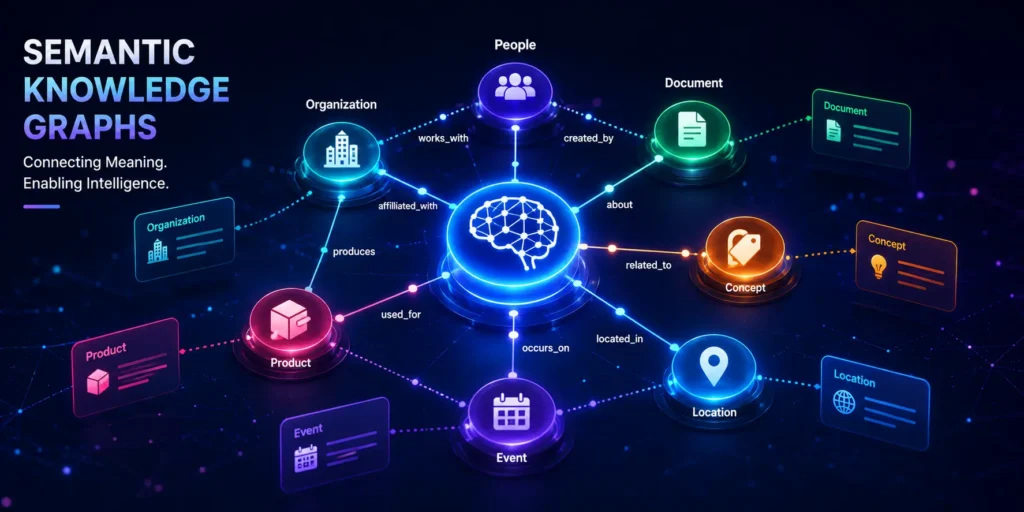
What Are Semantic Knowledge Graphs?
Semantic Knowledge Graphs are structured networks of connected information that help search engines understand the meaning behind data instead of simply matching keywords.
Instead of viewing information as isolated pages, a knowledge graph connects entities and their relationships.
For example:
| Entity | Relationship | Entity |
|---|---|---|
| Apple | Founded By | Steve Jobs |
| Apple | Produces | iPhone |
| iPhone | Uses | iOS |
| iOS | Developed By | Apple |
Rather than treating these as separate pages, search engines understand how every piece of information connects.
This creates much richer search results and more accurate answers.
Why Semantic Knowledge Graphs Matter for SEO
Modern SEO is no longer keyword stuffing.
Google now evaluates:
- Entity relationships
- Context
- User intent
- Topic relevance
- Content depth
- Brand authority
Semantic Knowledge Graphs enable search engines to understand these connections.
Benefits include:
- Better topical authority
- Improved rankings
- Enhanced rich results
- Stronger AI search visibility
- Better user experience
- Higher click-through rates
How Google Uses Semantic Knowledge Graphs
Google introduced its Knowledge Graph years ago to move beyond traditional keyword matching.
Today, Google connects:
- Businesses
- Locations
- Products
- People
- Events
- Organizations
- Services
- Books
- Movies
- Medical concepts
- Scientific topics
Instead of simply finding matching words, Google identifies entities and understands their relationships.
For example:
A user searches:
“Best cameras for wildlife photography.”
Google understands:
- wildlife photography
- DSLR
- mirrorless cameras
- autofocus
- Canon
- Nikon
- Sony
- telephoto lenses
These connected concepts help Google return more useful results.
Difference Between Keywords and Semantic Knowledge Graphs
| Traditional SEO | Semantic SEO |
|---|---|
| Focuses on words | Focuses on meaning |
| Keyword matching | Entity relationships |
| Exact phrases | Context understanding |
| Page-based | Topic-based |
| Limited relevance | Deep semantic relevance |
| Basic indexing | Intelligent connections |
Core Components of Semantic Knowledge Graphs
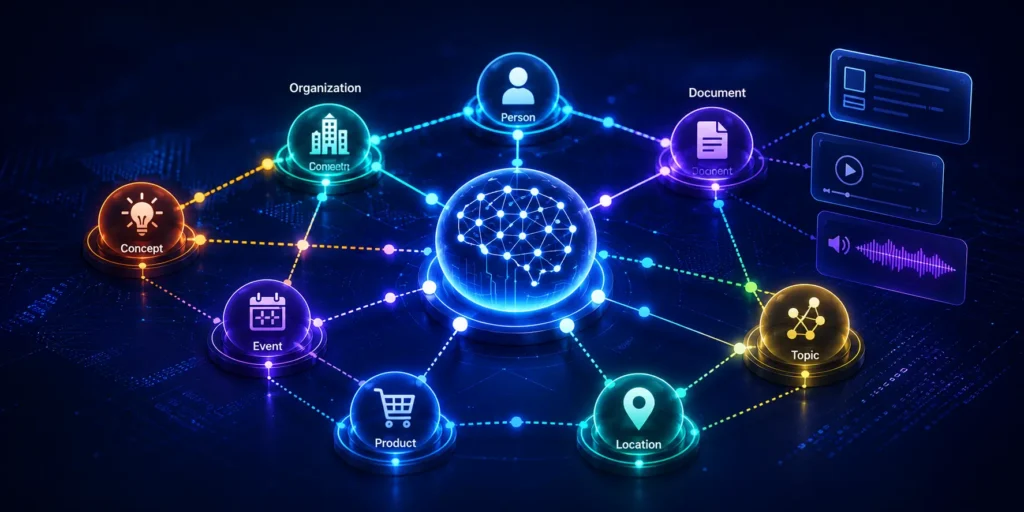
1. Entities
Entities are unique objects.
Examples include:
- Company
- Brand
- Product
- Person
- City
- Organization
- Event
Google recognizes millions of entities.
2. Relationships
Entities gain meaning through relationships.
Example:
Nike → manufactures → Running Shoes
Running Shoes → used for → Marathon
Marathon → requires → Endurance
3. Attributes
Every entity contains characteristics.
For example:
Restaurant
- Location
- Rating
- Cuisine
- Opening Hours
- Phone Number
4. Ontology
Ontology defines how concepts relate to one another.
Example:
Vehicle
↓
Car
↓
Electric Car
↓
Tesla
↓
Model Y
Search engines use these hierarchies for understanding.
Benefits of Semantic Knowledge Graphs for Businesses
Businesses using Semantic Knowledge Graphs gain significant competitive advantages.
Benefits include:
- Improved organic rankings
- Better AI Overview visibility
- Rich snippets
- Voice search optimization
- Better local SEO
- Higher trust signals
- Increased authority
Semantic Knowledge Graphs and AI Search
Artificial Intelligence relies heavily on entity relationships.
AI systems understand:
- Concepts
- Context
- Connections
- Intent
This makes Semantic Knowledge Graphs extremely important for:
- AI Overviews
- Chatbots
- Voice Assistants
- AI Search Engines
- Recommendation Systems
Semantic Knowledge Graphs for eCommerce
Online stores benefit enormously.
Example:
Product
↓
Category
↓
Brand
↓
Features
↓
Use Cases
↓
Reviews
↓
Accessories
↓
Comparison
↓
Buying Guide
↓
Warranty
Google understands the complete buying journey.
Schema Markup and Semantic Knowledge Graphs
Schema Markup provides structured data that feeds knowledge graphs.
Important schema types include:
- Organization
- Product
- Local Business
- FAQ
- Article
- Breadcrumb
- Person
- Event
- Video
- Review
Implementing schema helps search engines connect entities more accurately.

Best Practices for Building Semantic Knowledge Graphs
Create Topic Clusters
Instead of isolated articles, build interconnected content.
Example:
Digital Marketing
↓
SEO
↓
Technical SEO
↓
Semantic SEO
↓
Knowledge Graphs
↓
Entity SEO
↓
Schema Markup
Frequently Asked Questions (FAQs)
Conclusion
As search engines become more intelligent, creating content that reflects real-world relationships is more important than ever. Semantic Knowledge Graphs enable search engines and AI systems to understand context, entities, and user intent, leading to better visibility, richer search experiences, and stronger long-term SEO performance.
By combining high-quality content, structured data, topic clusters, internal linking, and multimodal assets such as images, videos, and audio, businesses can build lasting topical authority and stay ahead in the evolving search landscape.
If you’re looking to implement advanced Semantic SEO, Knowledge Graph optimization, structured data, and AI-ready content strategies for your business, visit http://winkdezign.com and discover professional SEO solutions designed to improve rankings, visibility, and sustainable organic growth.