


Multimodal SEO: The Complete Guide to Ranking
Search engines are evolving faster than ever. Traditional SEO focused mainly on optimizing written content, but today’s search experience goes far beyond text. Users now discover information through images, videos, podcasts, voice assistants, AI Overviews, and visual search platforms. This shift has made Multimodal SEO one of the most important digital marketing strategies for businesses that want to stay competitive.
Whether someone uploads an image to search, asks a voice assistant a question, watches a product review on YouTube, or reads an AI-generated search summary, search engines analyze multiple types of content together. Businesses that optimize only written articles miss valuable opportunities to reach potential customers across different search experiences.
In this comprehensive guide, you’ll learn everything about Multimodal SEO, including how it works, why it matters, practical optimization strategies, real-world examples, common mistakes, future trends, and actionable tips to improve your website’s visibility across modern search platforms.
What is Multimodal SEO?
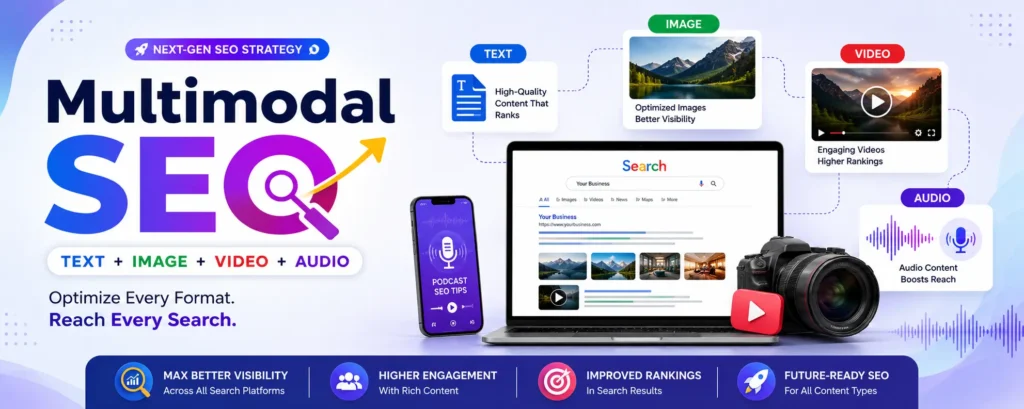
Multimodal SEO is the practice of optimizing multiple content formats—including text, images, videos, audio, infographics, and structured data—so search engines can better understand, index, and rank your content across different search experiences.
Instead of relying only on written content, multimodal optimization ensures every content type supports your SEO goals.
A multimodal page may include:
- Well-written SEO content
- Optimized images
- Explainer videos
- Product demonstration videos
- Audio podcasts
- Infographics
- Structured data
- FAQ sections
- Internal links
- External references
When all these elements work together, search engines gain stronger contextual understanding of your webpage.
Why Multimodal SEO Matters in 2026
Modern search engines increasingly use artificial intelligence to understand content similarly to humans.
Instead of simply matching keywords, they analyze:
- Images
- Video frames
- Spoken words
- User intent
- Context
- Relationships between content types
This allows Google and other search engines to provide more accurate search results.
Benefits of Multimodal SEO
| Benefit | Impact |
|---|---|
| Better search visibility | Higher rankings |
| Improved engagement | Lower bounce rate |
| Rich search features | More clicks |
| AI Overview visibility | Increased authority |
| Better user experience | Higher conversions |
| Voice search optimization | More organic traffic |
How Search Engines Understand Multimodal Content
Search engines no longer evaluate only page text.
Instead they combine signals from:
Text Analysis
They analyze:
- Headlines
- Body content
- Semantic relevance
- Internal links
- Topic authority
Image Recognition
Modern AI understands:
- Objects
- Colors
- Products
- Logos
- Locations
- Facial recognition
- Charts
For example:
An image showing a solar panel installation helps Google understand the page even if those exact words appear less frequently.
Video Understanding
Search engines analyze:
- Speech
- Captions
- Thumbnail
- Scene transitions
- Metadata
- User engagement
A tutorial video can rank independently while also improving the ranking of the webpage hosting it.
Audio Recognition
Podcasts and audio files are transcribed automatically.
Search engines index:
- Spoken keywords
- Topic relevance
- Speaker authority
- User engagement
Core Components of Multimodal SEO
1. SEO-Optimized Text
Written content remains the foundation.
Best practices include:
- Clear headings
- Helpful information
- Semantic keywords
- Short paragraphs
- Natural keyword usage
Avoid keyword stuffing.
Instead, answer user questions comprehensively.
2. Optimized Images
Images should support the content rather than decorate it.
Best practices:
- Descriptive filenames
- Alt text
- Compressed file sizes
- Responsive images
- Modern formats like WebP
- Relevant captions
Example:
Instead of:
IMG001.jpg
Use:
multimodal-seo-dashboard.webp
3. Video Optimization
Videos significantly increase engagement.
Optimization includes:
- Keyword-rich title
- Detailed description
- Closed captions
- Transcript
- Chapters
- Thumbnail optimization
Example:
A 5-minute tutorial explaining Multimodal SEO can rank in both Google Search and YouTube Search.
4. Audio Content
Podcasts are becoming valuable SEO assets.
Include:
- Episode transcript
- Show notes
- Keywords naturally spoken
- Timestamp summaries
5. Structured Data
Schema helps search engines understand content.
Useful schemas include:
- FAQ
- Article
- Video
- Image
- Organization
- Product
- Breadcrumb
Multimodal SEO vs Traditional SEO
| Traditional SEO | Multimodal SEO |
| Text focused | Multiple formats |
| Keywords | Context |
| Articles | Articles + Videos + Images |
| Manual optimization | AI-assisted optimization |
| Limited visibility | Multi-platform visibility |
Best Practices for Multimodal SEO
Use High-Quality Images
Avoid stock images whenever possible.
Use:
- Original photography
- Screenshots
- Custom graphics
- Infographics
Add Image Alt Text
Example:
“Multimodal SEO workflow showing text image video and audio optimization.”
Publish Videos Regularly
Educational videos often outperform promotional videos.
Ideas include:
- Tutorials
- Product demos
- Behind-the-scenes
- Customer success stories
Include Video Transcripts
Transcripts help:
- Accessibility
- Keyword coverage
- Search indexing
Optimize Audio Files
Include:
- Descriptions
- Chapters
- Keywords
- Transcript
Improve Page Speed
Compress:
- Images
- Videos
- JavaScript
- CSS
Fast-loading pages improve rankings and user experience.
Create Helpful Content
Answer real customer questions.
Examples:
- How to choose…
- Best practices…
- Common mistakes…
- Step-by-step guide…

Tools for Multimodal SEO
Popular tools include:
- Google Search Console
- Google Analytics
- Google PageSpeed Insights
- Google Rich Results Test
- Google Business Profile
- YouTube Studio
- Google Lens
- Lighthouse
- Screaming Frog
- Ahrefs
- Semrush
Future Trends
Multimodal search will continue growing because AI systems increasingly understand human communication beyond text.
Future developments include:
- AI-generated summaries
- Visual search expansion
- Voice commerce
- Personalized search
- Interactive search experiences
- Augmented reality search
- Smarter recommendation systems
Businesses adopting multimodal optimization today will have a competitive advantage tomorrow.
Actionable Multimodal SEO Checklist
✅ Publish helpful long-form content
✅ Use original images
✅ Compress images
✅ Write descriptive alt text
✅ Add videos
✅ Include transcripts
✅ Create audio summaries
✅ Implement schema markup
✅ Improve page speed
✅ Optimize for mobile
✅ Strengthen internal linking
✅ Update old content regularly
Frequently Asked Questions (FAQs)
Conclusion
Search is no longer limited to keywords typed into a search box. Today’s users interact with search engines through text, images, videos, voice, and AI-powered experiences. By embracing Multimodal SEO, businesses can create richer, more engaging content that satisfies user intent and aligns with how modern search engines interpret information.
Success with Multimodal SEO requires more than publishing articles. It involves creating an integrated content ecosystem where every image, video, audio clip, and piece of structured data reinforces your topic authority. This approach improves visibility across traditional search, AI Overviews, image search, video platforms, and voice assistants while delivering a better experience for users.
If you’re looking to future-proof your digital presence and maximize organic growth, start implementing Multimodal SEO today. Build high-quality, user-focused content, optimize every media asset, and continuously measure performance. For professional website development, SEO strategy, AI search optimization, and digital marketing solutions, explore the services offered by Winkdezign at http://winkdezign.com and take the next step toward sustainable online success.